Struggling to Sleep? Your Body May Be Asking for Balance
A good night’s sleep should feel natural, but for many people it has become a nightly struggle. You may fall asleep easily but wake at 2 or 3 a.m. You may feel exhausted all day, then suddenly wired at bedtime. Or you may sleep through the night but wake feeling unrested.
At Phoenicia Healing Arts, we look at sleep through a whole-body lens. Instead of asking only, “How do we make you fall asleep?” We ask deeper questions: Why is your nervous system staying alert? Is stress disrupting your rhythm? Is digestion affecting rest? Is pain, tension, hormonal change, or emotional strain keeping the body from settling?
For those searching for natural sleep support in Phoenicia, NY, or acupuncture for insomnia in the Hudson Valley, acupuncture, Chinese herbs, nutrition, and lifestyle medicine can offer a grounded, personalized path toward better rest.
Why Sleep Problems Happen in Chinese Medicine
In Traditional Chinese Medicine, sleep is connected to the balance of Qi, Blood, Yin, Yang, and the smooth communication between the body’s organ systems. When the body is balanced, the mind can settle, the nervous system can soften, and sleep comes more easily.
When the system is out of rhythm, sleep may become disrupted. Common patterns may include:
- Difficulty falling asleep because the mind feels busy
- Waking in the night with stress or frustration
- Restless sleep with vivid dreams
- Waking hot, sweaty, or uncomfortable
- Light sleep that leaves you feeling unrefreshed
- Sleep disrupted by pain, tension, digestion, or anxiety
This is why a holistic approach matters. Insomnia is not always just a “sleep problem.” It may be connected to stress, digestion, pain, hormones, emotional overload, or daily habits that keep the body in a state of alert.
Acupuncture for Insomnia and Nervous System Support
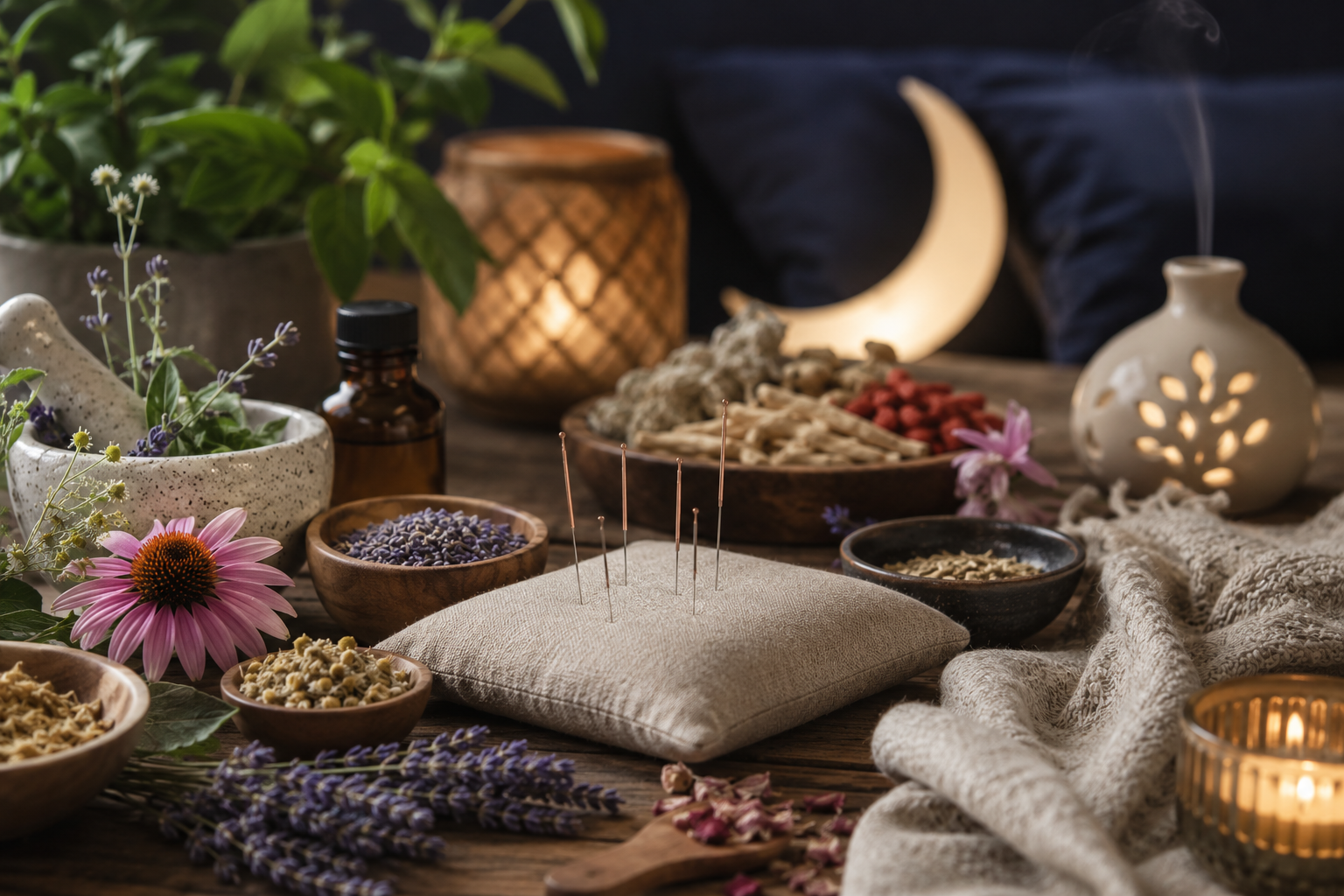
Acupuncture is often used to support relaxation, stress regulation, pain relief, and overall balance. During treatment, fine, sterile needles are placed at specific points chosen for your unique pattern and symptoms.
For sleep concerns, acupuncture may focus on calming the nervous system, easing muscle tension, supporting digestion, regulating stress response, and encouraging the body to shift out of “fight or flight” mode.
Many people describe acupuncture sessions as deeply calming. Some feel heavy, peaceful, or unusually relaxed during treatment. For those who feel “tired but wired,” acupuncture may help create the internal conditions for rest rather than forcing sleep artificially.
At Phoenicia Healing Arts, treatment is individualized. Your session may also include gentle adjunct therapies such as cupping or Gua Sha if pain, neck tension, shoulder tightness, or stress-related muscle holding is contributing to poor sleep.
Chinese Herbs for Sleep Support
For some people, acupuncture provides a powerful reset, but daily support is also needed. This is where Chinese herbs may be helpful.
Chinese herbal medicine is not a one-size-fits-all sleep aid. Instead, formulas are traditionally chosen based on your constitution and symptom pattern. One person may need support for an overactive mind. Another may need nourishment for depletion, cooling support for heat symptoms, or digestive support when food and sleep are closely linked.
A personalized herbal consultation may consider questions such as:
- Do you wake at the same time every night?
- Do you feel hot, anxious, restless, or depleted?
- Is your sleep affected by digestion or late meals?
- Do you experience stress, grief, irritability, or hormonal changes?
- Are you taking medications or supplements?
Herbs should always be selected thoughtfully, especially if you are pregnant, managing a medical condition, or taking prescription medications.
Lifestyle Medicine: Small Habits That Help Sleep Return
Sleep improves when the body receives consistent signals of safety and rhythm. Through lifestyle counseling, we look at the habits, routines, and stress patterns that may be affecting your rest.
Supportive sleep practices may include:
- Creating a consistent bedtime and wake time
- Reducing bright screens before bed
- Eating dinner earlier and keeping evening meals lighter
- Building a calming wind-down ritual
- Taking a warm bath or foot soak
- Practicing gentle breathing before sleep
- Getting morning sunlight to support circadian rhythm
- Avoiding overwork, overstimulation, and late-night scrolling
These changes may sound simple, but when chosen for your body and lifestyle, they can be powerful. The goal is not perfection. The goal is creating a rhythm your nervous system can trust.
Food, Digestion, and Better Sleep
Sleep and digestion are closely connected. Heavy meals, irregular eating, excess sugar, alcohol, caffeine, or eating too late may all interfere with rest. Through nutritional counseling, we can explore food choices that support steadier energy, calmer evenings, and better overnight recovery.
In Chinese medicine, warm, nourishing foods are often preferred for people who feel depleted, anxious, or unsettled. For others, reducing inflammatory or stimulating foods may be part of the plan. Your recommendations should match your body, not a generic trend.
When to Seek Natural Sleep Support
You may benefit from holistic sleep support if you are dealing with:
- Insomnia or difficulty falling asleep
- Waking during the night
- Stress-related sleep disruption
- Anxiety with an overactive mind
- Hormonal sleep changes
- Pain or tension that wakes you up
- Fatigue despite getting enough hours in bed
- Dependence on temporary fixes that do not address the root cause
If sleep problems are severe, sudden, or connected with breathing issues, chest pain, major depression, or other medical concerns, it is important to speak with a qualified healthcare provider.
Restore Your Rhythm Naturally
Sleep is one of the body’s most important healing processes. When it is disrupted, everything can feel harder: mood, digestion, immunity, focus, energy, and resilience.
At Phoenicia Healing Arts, we offer a whole-person approach to natural sleep support using acupuncture, Chinese herbs, nutrition, and lifestyle medicine. Whether your sleeplessness is connected to stress, pain, digestion, hormones, or feeling stuck in overdrive, your care plan is tailored to you.
Ready to sleep more deeply and wake feeling restored? Book a session with Phoenicia Healing Arts in Phoenicia, NY, and begin your path back to balance.
Frequently Asked Questions
Can acupuncture help with insomnia?
Acupuncture may support sleep by helping the nervous system settle, easing tension, and addressing patterns related to stress, pain, digestion, or emotional imbalance.
Are Chinese herbs safe for sleep?
Chinese herbs should be selected by a qualified practitioner based on your health history, medications, and individual pattern. They are not a one-size-fits-all remedy.
How many acupuncture sessions do I need for sleep?
This depends on how long the issue has been present, your stress level, lifestyle, and overall health. Many people begin with consistent sessions, then adjust as sleep improves.
Do I need lifestyle changes too?
Often, yes. Acupuncture and herbs can be powerful, but sleep usually improves best when daily rhythms, food, stress, and evening habits are also addressed.